

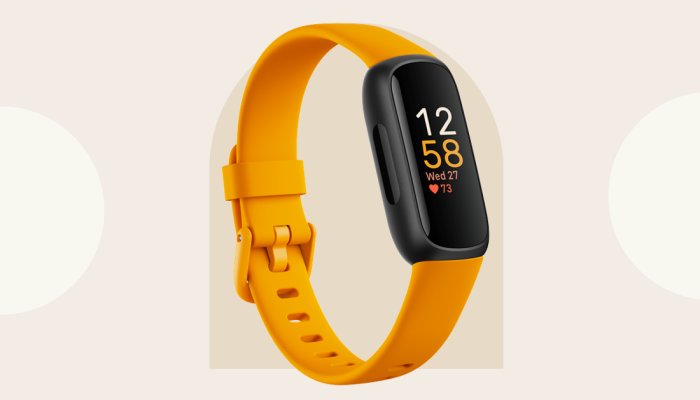
Take your health into your own hands.
The 6 Best HRV Monitors Of 2022 To Optimize Your Days (& Nights)


Heart rate variability (HRV) is a metric used to determine our bodies' readiness and adaptability under stress, by measuring the amount of time between heartbeats—and understanding this metric might just be the key to enhanced exercise performance, better sleep, less stress1, and a longer, more resilient life. The best HRV monitors accurately assess your heart rate variability throughout the day and night (no matter where you are) to help you improve your overall health and well-being.
Everyone will have a different baseline, but when it comes to optimizing your body's performance, the general goal is to increase your heart rate variability over time. A lower HRV has been linked with diabetes, cardiovascular disease, inflammation, obesity, and psychiatric disorders2, but increasing your HRV helps to calm down your body, minimize stress1, and improve sleep, digestion, concentration, and ultimately, your vitality. Sign us up for all of the above.
Today, there are trackers to monitor your heart while you sleep, work out, and anywhere in between. "A chest strap is commonly used to gather this data, but there are now fitness trackers that are worn on the wrist or finger that can capture and calculate heart rate variability," says Sanul Corrielus, M.D., board-certified cardiologist and author of Healing the Spartan.
To help you gain a better understanding of how aspects like diet, nutrition, exercise, and sleep are affecting your heart rate variability (and your body's performance), we hunted down the best HRV monitors on the market today—so you can take your health into your own hands.
A quick peek at the best HRV monitors of 2022:
HRV vs. HR.
Before we dive in, let's break down what our HRV actually tells us. While your heart rate is measured by the number of times your heart beats per minute, your heart rate variability measures (in milliseconds) the time between your heartbeats. Current research tells us that tracking HRV can help us understand how our nervous system affects our overall heart health3, especially in relation to stress and physical activity.
"Heart rate variability is a measurement of the balance between your sympathetic and parasympathetic branches of your autonomic nervous system," explains board-certified cardiologist Michael Twyman, M.D. "Low heart rate variability is associated with increased stress and lower parasympathetic tone, while high heart rate variability is associated with decreased stress and higher parasympathetic tone."
Corrielus adds that your HRV can provide valuable insights into your overall health and well-being. "If your heart rate is highly variable, it indicates that your body is highly adaptable to where you are and what you are doing," he says. "People who are happy and less stressed have a higher heart rate variability. Similarly, those who are stressed and unsettled tend to have higher heart rate and a low heart rate variability."
If you're used to referencing higher heart rate as a sign of stress, the concept of high HRV as a good thing can be a bit confusing. Remember: High variability means you're highly adaptable or, in other words, ready to take on whatever life throws at you.
Benefits of monitoring your HRV.
HRV can be a helpful tool for understanding your overall readiness and adaptability. "While you can measure your heart rate by using your fingers to measure your pulse, [unfortunately] you will not be able to measure your heart rate variability without a device that can clearly measure your electrical activity from your heart," Twyman says.
Below are a few key insights you can gain from keeping tabs on your heart rate variability:
Athletic performance and overtraining: HRV has been long recommended as a tool to warn of overtraining and to optimize performance in athletes of all levels4. Some HRV monitors even send you notifications when you're pushing it too far, which can help prevent injury and stress.
Sickness: A downward trend in HRV can signal that you're not getting adequate sleep or that your immune system is weakened. "A decrease in heart rate variability is sometimes an early warning sign that you are about to be sick," Twyman confirms.
Stress: Research suggests that fleeting stressful moments, such as making time-sensitive decisions, public speaking, or test-taking, can significantly decrease HRV5. Monitoring your HRV gives you more awareness during these situations so you can properly seek out tools for coping with this acute stress.
"There are no dangers or significant downsides in measuring your heart rate variability," Twyman confirms. He does, however, note that your HRV is very personal, and it's best to always compare it to your baseline versus someone else's.
"Heart rate variability can be a good tool to help gauge your health—but just like any other tool, it has to be used cautiously," agrees Corrielus. "While there is no danger in monitoring HRV, the information has to be checked for accuracy, depending on the device's use (some are more reliable than others), and the information has to be put into the context of the full clinical picture."
If you have any concerns about your heart health or the data you're seeing from a wearable tracker, it's always best to consult your doctor.
How to choose the best HRV monitor.
Display: Consider how you prefer to read your data. Some HRV monitors have a display screen, while others collect data through sensors and send this info to be viewed on apps or various devices.
Activity & durability: Some trackers are simply more durable than others. For example, the Apple Watch has come a long way with its durability, but a cracked screen from a collision or high fall is still a big bummer. Ultimately, the best device for you will depend on what you're using it for. For example, if you're hoping to track your HRV through activities like swimming, you'll need something waterproof.
Where you'll wear it: Rings are easy to sleep with but might not be best for lifting weights. Watches are great for daytime use but could feel clunky to sleep with. Chest straps are great for exercise, but it's unlikely you'll want to wear one out and about all day (or to sleep, for that matter).
Cost: Consider how much you want to spend on your tracker and whether you'd prefer it be a one-time purchase or if you're willing to pay a subscription fee every month. Some devices (like WHOOP) require a monthly payment but have no upfront cost. Others (like the Fitbit Inspire 3) have a low upfront cost but still require a monthly payment to get the most data out of your device.

Đăng nhận xét