

- Ukraine war - live: British medic killed in action as troops battle for Kherson The Independent
- Ukraine war: British volunteer medic killed Sky News
- British volunteer medic killed in Ukraine, sister says The Guardian
- Ukraine war: Briton killed while volunteering in Ukraine, says sister BBC
- Briton killed while volunteering as medic in Ukraine The Telegraph
- View Full coverage on Google News
A team of UN inspectors have arrived at Ukraine's Zaporizhzhia nuclear plant complex to assess the risk of a radiation disaster after being delayed several hours by shelling near the site.
It comes as Ukraine's state nuclear company Energoatom said Russian shelling had forced the shutdown of one of only two operating reactors at the site, while Moscow said it had thwarted a Ukrainian attempt to seize the plant.
Both sides accused each other of trying to sabotage the visit by the International Atomic Energy Agency (IAEA) to the Zaporizhzhia nuclear plant in southern central Ukraine, which is controlled by Russian forces but operated by Ukrainian staff.
Russia's defence ministry said the situation around the Zaporizhzhia nuclear plant in Ukraine is “difficult but remains under full control”, after reports of fighting in the nearby town of Enerhodar.
IAEA chief Rafael Grossi said the team would press ahead with the plan to visit the facility and meet staff.
Indian troops join Russian military exercise despite US concerns
Soldiers from the Indian army have landed in Russia for a week-long military exercise, India's defence ministry said.
It comes days after the United States said it had concerns about any country exercising with Russia now.
The Indian government said that its forces have regularly participated in multilateral exercises in Russia, along with a number of other countries. Russia is the biggest supplier of military hardware to India.
An Indian Army contingent “arrived at the exercise location and over the next seven days will undertake joint manoeuvres to include joint field training exercises, combat discussions, and firepower exercises,” the Indian defence ministry said in a statement.
Moscow announced in late July that it would hold the “Vostok” (East) exercise in the east of the country, despite waging a six-month-long war in Ukraine, where it has suffered heavy losses of personnel and equipment. China, Belarus, Mongolia and Tajikistan are the other participants.
The United States, which has deepened its military partnership with India in recent years, has indicated its discomfort with Indian troops joining the exercise in Russia.
“The United States has concerns about any country exercising with Russia while Russia wages a unprovoked, brutal war against Ukraine,” White House press secretary Karine Jean-Pierre said on Tuesday.
“But, of course, every participating country will make its own decisions.”
The previous Vostok drills in 2018 took place on a massive scale with nearly 300,000 troops reported to be involved, including for the first time from the Chinese army.
ICYMI: I spent a summer living in Gorbachev’s USSR – this is what it was like
Yazz and the Plastic Population (ask your parents) were top of the charts, and Big was, appropriately, the biggest movie of the year. But 1988 for me was all about Mikhail Gorbachev and the USSR, foreign editor David Harding, writes.
“Studying” at university, we were generously offered the chance to spend a summer living and learning a language abroad, even though it was only a small part of our course. The choices were French (couldn’t pronounce the words, still can’t), Spanish (my arrogant 18-year-old self said I already knew enough to get by after a couple of holidays), German (no thanks), or Russian, the language, according to US President Ronald Reagan of the “Evil Empire”.
There was little contest, as while my friends were getting ready to spend a summer in Pamplona, Provence or Berlin, the lure of Moscow was too strong. That might seem strange, but at the time of the Cold War, one half of Europe was virtually cut off to us in the West, and the only thing we ever saw or read about the USSR was grim.
Read the full story below:

Opinion: I spent a summer living in Gorbachev’s USSR – this is what it was like
The Metro was wonderful, full of ornate chandeliers, and with scary-looking babooshkas sitting at the bottom of every escalator. I was too afraid to ask why
The Missing: The Ukrainians abducted in Putin’s war
Russia’s invasion of Ukraine has turned into a quagmire of attrition, leaving a wake of destruction and hundreds of thousands killed across the country.
As the fighting has raged and areas in the east and south change hands, families caught in the battles have faced waves of terror with many now searching for answers about missing family members.
The Independent’s international correspondent Bel Trew has followed an investigation into those lost in the fighting, finding new evidence of potential war crimes, including torture, disappearances and forced labour.
Trew has provided groundbreaking insight into life in Ukraine as Russia’s “special military operation” rages. She shone a light on Mariupol during the city’s darkest hour being besieged by Russian forces, as well as uncovering evidence of potential war crimes at a Russian prison camp where Ukrainians vanish.
Cutting use of Russian energy ‘good’ outcome of Ukraine war, Boris Johnson says
Prime minister Boris Johnson said cutting reliance on Russian energy imports would be a good outcome of the war in Ukraine, as western nations seek to reduce purchases of Russian products.
“Out of this catastrophe, of Putin's war, I think good is going to come, in that Europe will wean itself off Russian hydrocarbons,” Mr Johnson, speaking at the site of a nuclear power plant in eastern England, said.
“We will no longer be subject, vulnerable, to his blackmail, and in this country, we will have greatly accelerated long overdue reforms and steps to become energy independent, in particular, by rectifying the damage we've done to our nuclear industry.”
It comes as Boris Johnson confirmed that he is committing £700m of government money to a new £30bn nuclear reactor at Sizewell C in Suffolk.

IAEA convoy arrives at Zaporizhzhia nuclear plant -Ukraine's Energoatom
The IAEA mission to the Zaporizhzhia nuclear plant has arrived at the power station, Ukraine's state nuclear company Energoatom confirmed in a Telegram post on Thursday.
Russia and Ukraine earlier accused each other of trying to sabotage the mission of the International Atomic Energy Agency (IAEA) to the plant in southern central Ukraine, which is controlled by Russian forces but operated by Ukrainian staff.
Conditions at the nuclear plant, Europe's largest, have been unravelling for weeks, with Moscow and Kyiv regularly trading blame for shelling in the vicinity and fuelling fears of a Chornobyl-style radiation disaster.
A Reuters reporter saw the IAEA team arrive in a large convoy with a heavy presence of Russian soldiers nearby. A Ukrainian source with knowledge of the situation told Reuters the mission "may turn out to be shorter than was planned".
Ukraine's state nuclear company Energoatom said Russian shelling had forced the shutdown of one of only two operating reactors at the site, while Moscow said it had thwarted a Ukrainian attempt to seize the plant.

Boris Johnson confirms £700m of state backing for new nuclear reactor at Sizewell
Boris Johnson today confirmed that he is committing £700m of government money to a new £30bn nuclear reactor at Sizewell C in Suffolk.
In a message to the successor - Liz Truss or Rishi Sunak - who will take over from him as prime minister on Tuesday, Mr Johnson said: “Go nuclear, go large, go with Sizewell C.”
He blamed the “myopia” of earlier administrations for failing to deliver the nuclear power which could have kept energy bills down this winter.
The investment comes as Britain strives to be more energy independent after a surge in oil and gas prices following the war in Ukraine has left millions of households facing fuel poverty this winter.
“We need to ... get on with Sizewell C,” Mr Johnson said, speaking at Sizewell in Suffolk, eastern England. “In the course of the next few weeks, I am absolutely confident that it will get over the line.”

Russian oil firm boss dies ‘falling out of hospital window’ after criticism of Ukraine war
The chairman of Russian energy firm Lukoil has died after falling from a hospital window in Moscow, state media has reported.
Ravil Maganov, 67, was pronounced dead after plunging from ward on the sixth floor of the Central Clinical Hospital where he was receiving treatment, according to Russian state news agency Interfax.
Police are investigating the cause of his fall, which came months after Lukoil publicly opposed Vladimir Putin’s invasion of Ukraine.
The company confirmed his death in a statement which said only he had “passed away following a severe illness”.
Russian state news agency Tass reported Mr Maganov’s death as suicide and said he had been in hospital following a heart attack.
Lukoil, which is Russia’s second-largest oil producer, is one of the few companies in the country to come out in opposition to the war in Ukraine. In a statement in March it said: “Calling for the soonest termination of the armed conflict, we express our sincere empathy for all victims, who are affected by this tragedy.
Read the full story below:
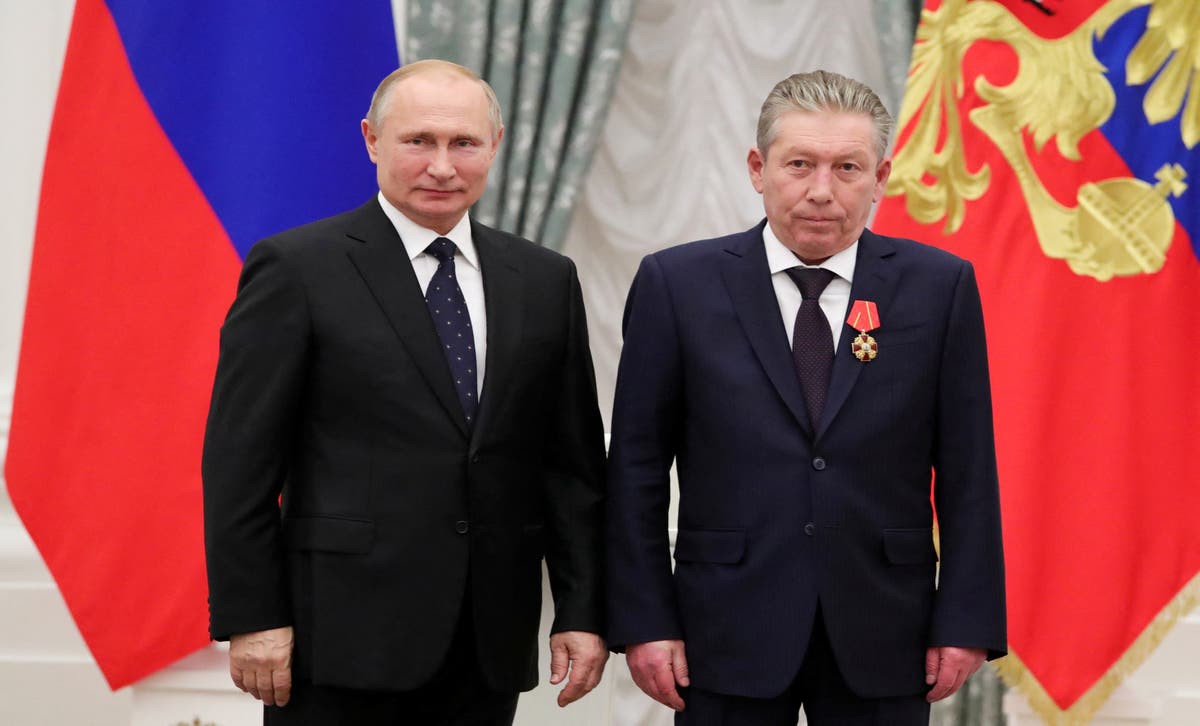
Russian oil firm boss ‘dies falling from window’ after opposing Ukraine war
Lukoil, the Kremlin’s second-largest oil producer, called for an end to the conflict in March
Kremlin says it fears Ukrainian provocation at Zaporizhzhia nuclear plant
The Kremlin said it was concerned about a possible “provocation” from Ukraine at the Russian-held Zaporizhzia nuclear power plant ahead of a visit by the United Nations nuclear watchdog.
Russia and Ukraine have accused each other of trying to sabotage the mission of the International Atomic Energy Agency (IAEA) to the plant in southern Ukraine, which was delayed on Thursday due to shelling near the facility.
“We are concerned about a provocation from the Ukrainian side, given that barbaric and provocative shelling has not stopped,” Kremlin spokesman Dmitry Peskov told reporters on a conference call.
Mr Peskov said Russia was ready to cooperate with the IAEA and was interested in seeing the IAEA mission arrive at the plant.
A spokesperson for the IAEA said that its mission was waiting at a Ukrainian checkpoint after fresh shelling but remained determined to reach the facility later in the day.
Foreign minister Sergei Lavrov said earlier on Thursday that Russia was doing everything to ensure that the plant, controlled by Russian forces but operated by Ukrainian staff, was operating safely.

The Kremlin said on Thursday that a European Union decision to scrap a simplified visa regime for Russian tourists was “ridiculous” and bad news for Russian citizens.
In a conference call with reporters, Kremlin spokesman Dmitry Peskov also hinted that Russia was weighing possible retaliatory measures, saying the move would “make the situation more difficult for Europeans as well”
It comes as Finland on Thursday slashed the number of visas issued to Russian citizens to a tenth of the regular amount in a move seen as a show of solidarity with Ukraine.
Finland, which shares the longest border with Russia of all European Union member countries, announced the decision in August amid growing pressure from politicians and ordinary citizens to restrict the movement of Russian tourists through the Nordic country as Moscow continues its war in Ukraine.
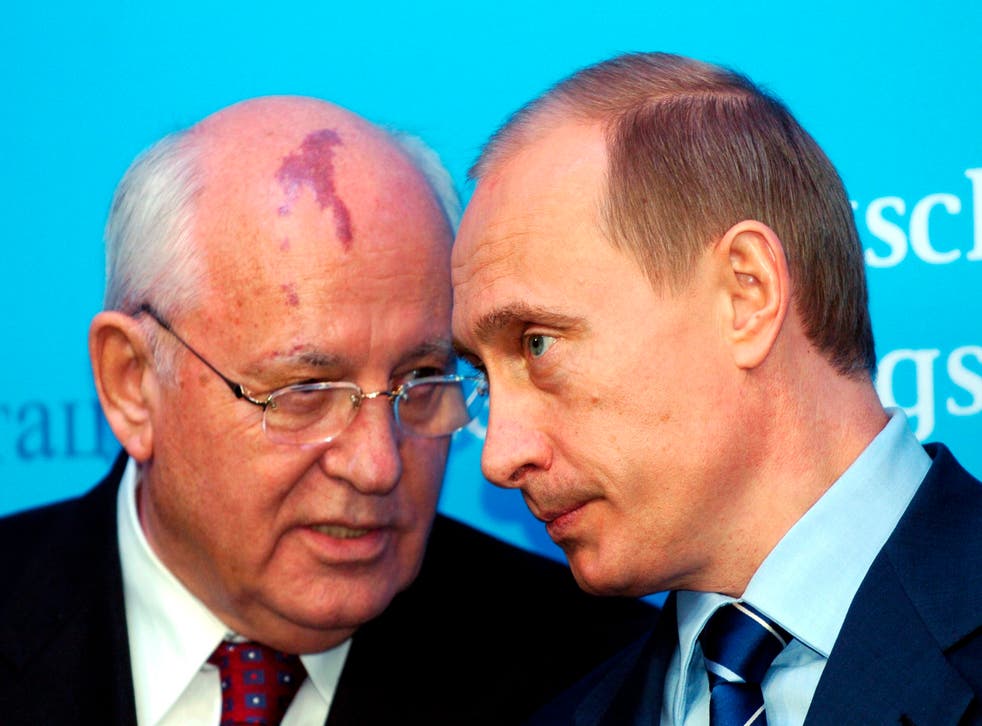
Vladimir Putin will not attend the funeral of Mikhail Gorbachev
Russian president Vladimir Putin will not attend the funeral of the last Soviet leader, Mikhail Gorbachev, on Saturday because of schedule constraints, the Kremlin said.
In a call with reporters, Kremlin spokesman Dmitry Peskov said Putin had paid his respects on Thursday morning by visiting Moscow's Central Clinical Hospital, where Gorbachev died on Tuesday.
The funeral will take place on Saturday, Russian news agencies reported, citing Gorbachev’s daughter and a spokesperson for his foundation. It is reported that it will take place in the famous Hall of Columns inside Moscow’s House of Unions, the same place where Josef Stalin’s body was put on display following his death in 1953.
Nguồn bài viết Du học Đồng Thịnh | (+84) 96 993.7773 | (+84) 96 1660.266 | (+44) 020 753 800 87 | info@dongthinh.co.uk

Đăng nhận xét