

Arron Banks almost crushed me in court. Instead, my quest for the facts was vindicated The Guardian
The Observer view on Carole Cadwalladr and a victory for public interest journalism The Guardian
Arron Banks almost crushed me in court. Instead, my quest for the facts was vindicated
Carole Cadwalladr
The libel claim brought by the Brexit campaigner took its toll. But the judgment offered personal relief and hope for public interest journalism
Last week, after a nearly six-month wait, I learned that I’d won the libel claim brought against me by Arron Banks, the main funder of the Leave.EU campaign. It has been a long, brutal haul and the stress over the three years since it began has been extreme. I’m not so much relieved as completely numb.
I had been braced to lose and I knew exactly what would happen if I had. The headlines I would face, the accusation that I was – what my detractors have always claimed – a “conspiracist”, the social media shitstorm that would ensue. I had no doubt about how devastating it would be because every step of this litigation has felt as if it was aimed at trying to crush me. In large part, it’s succeeded.
The lawsuit was directed at 24 words I used in a Ted Talk in 2019 but my history with Banks goes back much further. The entire investigation that would uncover the Facebook-Cambridge Analytica scandal began in 2016 with a series of denials from the firm about its relationship with Leave.EU.
That investigation led not just to record fines against Facebook and Mark Zuckerberg being dragged before Congress, but to findings that Banks’s Leave.EU campaign had broken both electoral and data laws. But it was our revelations in this paper about his relationship with the Russian government that hit a nerve. Banks reported me to the police. He accused me of computer hacking and then blackmail.
And then a year later, he sued.
Over these words that I told the audience at Ted’s main conference in Vancouver: “… and I’m not even going to get into the lies that Arron Banks told about his covert relationship with the Russian government”.
I thought the meaning of these words was blindingly obvious. That he’d told lies about his covert relationship with the Russian government! I was wrong. In November 2019, as part of the hearing to determine the “legal” meaning of the words I had used, Mr Justice Saini came up with his formulation, not the one I thought the words had meant; not even the one Banks had advanced. He contended that I’d said he’d had “a secret relationship with the Russian government in relation to acceptance of foreign funding of electoral campaigns in breach of the law”.
The judge’s ruling meant that I was going to be put on trial to defend the truth of words I’d never said
It felt like I’d stepped into the pages of a Kafka novel. The judge’s ruling meant that I was going to be put on trial to defend the truth of a statement I’d never actually said or meant.
When news broke that I’d withdrawn the truth defence and would instead be defending it only on public interest, it sent the rightwing media system into meltdown. A tsunami of abusive articles, tweets, pronouncements from commentators and MPs, the low point of which was when the director of the Orwell prize rang me to say that of course they wouldn’t be asking for my prize back as the Spectator was demanding, but they’d taken it sufficiently seriously to take legal advice.
I don’t know if it was because these smears against me stuck or if our entire press had been rendered mute in the face of Banks’s legal threats, but the near total silence around this case has been one of its most extraordinary aspects. One month before Russia invaded Ukraine, as part of the legal action, documents disclosed by both me and Banks provided new insight about the relationship between the biggest funder of the Brexit campaign and the Kremlin in a multimillion pound trial against a journalist that 19 press freedom organisations said they believed was an abuse of law. Much of this went wholly unreported. Save for the Guardian, not a single mainstream news outlet covered any of it.
I’m writing this today because the law must change. We cannot and must not allow another journalist to go through this. Not for the sake of their sanity but for the health of our democracy. Because this is not democracy. It’s oligarchy. And Banks v Cadwalladr needs to be the last time these obscene laws are used against a journalist in this way.
What this case proves is that no journalist is safe. The judge, Mrs Justice Steyn, said that Banks’s case against me was not a “Slapp” suit, that is a strategic lawsuit against public participation. She said his attempt to seek vindication through the proceedings against me was legitimate. She is correct because it couldn’t be. There is no definition of a Slapp suit in UK law, which is why none of what I believe to be the abusive aspects of this case were entered into evidence. They formed no part of my defence, one of the things I found most upsetting after the trial.
However, the judge clearly states in her judgment that the Observer had previously published a report containing “essentially the same allegations, and a very similar meaning”. But Banks didn’t sue the Observer and he didn’t sue Ted, he sued me. He presumably thought I was the weakest link. He was wrong. But only because an incredible sea of people rose up to support me. I relied on the generosity of my legal team and the kindness of strangers: 28,887 people who contributed the astonishing sum of £819,835 to my two crowdfunders. Even writing that makes me tear up.
The ability to report on the Kremlin’s involvement with leading individuals in the Brexit campaign would have been stifled forever
It would have been utterly impossible for me to defend myself without this support. It was only barely possible even with it. But if I hadn’t done so, some key facts about the political moment that changed our country forever – Brexit – could have been rewritten.The ability to report on the Kremlin’s involvement with leading individuals in the Brexit campaign would have been stifled forever. The record could have been changed.
This is because what the coverage of the case last week missed, and what lay readers of the judgment probably won’t understand, is what an extraordinary document it is. Not just for what it means for all UK news outlets in terms of a public interest defence succeeding, but for a forensic examination of the facts of Banks’s relationship with the Russian government that is on the record forever.
I was blown away reading it. Mrs Justice Steyn painstakingly undertook her own examination of the accuracy of Banks’s claim that his “sole involvement with the Russians was a boozy six-hour lunch”. That is what he claimed after the Electoral Commission announced it would investigate the “true source” of his £8m donation to the Brexit campaign. And this is what she found. That statement was, she said, “wholly inaccurate”.
She examined all the underlying documentation, including evidence newly revealed in the case, and concluded “he had at least four meetings, including three lunches”. She added: “It would be wrong to expect a journalist to refrain from identifying such an inaccurate statement… as a lie.”
But it doesn’t end there. She noted: “The four meetings on 6 November 2015, 17 November 2015, 19 August 2016 and 18 November 2016 were probably not the full extent [of] Mr Banks’s meetings with Russian officials.” There were reasonable grounds to believe numerous other meetings occurred. She regards Banks’s words in an email on 19 January 2016 that he intended “to pop in and see the ambassador as well” were “suggestive of a relationship in which he could visit the Russian ambassador with ease”.
She said the statement by Andy Wigmore, spokesman for the Leave.EU campaign and Banks’s business partner, about why he retracted his claim that Banks was in Moscow in early 2016 as “not credible”. Nor was Banks’s claim that he received a document entitled “Russian gold sector consolidation play” from a British associate, not a Russian oligarch.
Boris Johnson’s government came to power on the coat-tails of Brexit. It has refused to investigate Russia’s continuing attacks on western democracy and our information systems. Johnson personally intervened to delay publication of the Intelligence and Security Committee’s Russia report. He continues to refuse its demand for an inquiry.
The only information we have about Russia’s efforts has come from US investigators and a handful of journalists. And now this judgment.
The personal, physical, psychological and professional toll of fighting this case has been profound. But it’s not my win, it belongs to the legal team and the 28,887 people who stood alongside me. Banks could still decide to appeal against Mrs Justice Steyn’s interpretation of the law. But not the facts.
Whatever happens next, we have these now. We held the line. There were at least four meetings between the main funder of the Brexit campaign and the Russian government. There are reasonable grounds to believe there were many more. Fact.
This article was amended on 19 June 2022 to refer to the author being contacted by the director of the Orwell prize, not by the prize’s chair as an earlier version said.
The Observer view on Carole Cadwalladr and a victory for public interest journalism
Observer editorial
The journalist’s successful defence is a testament to her courage and a warning to the very wealthy that they can’t rely on the courts to escape criticism
The resolve displayed by Carole Cadwalladr in her successful defence against a libel action brought by Arron Banks calls to mind Hemingway’s definition of courage as “grace under pressure”. For years, this award-winning journalist had been investigating the role of social media in our democracy and the role that Facebook in particular had played in the Brexit referendum. Since Banks was a leading figure in – and a substantial donor to – the leave campaign, she had inevitably become interested in his finances, and in a Ted Talk in April 2019 referred briefly to him in 24 words and later said something similar in a tweet.
The context for the remark was that the Times, the Observer and other news outlets had been reporting how Mr Banks had, as one lawyer put it, “misled everyone about the number, and nature, of his covert meetings with Russian officials”.
A judge held that Cadwalladr’s words conveyed a meaning that she said she had not intended and indeed didn’t believe to be true. She dropped her defence of truth and relied on one of public interest. Banks could have sued the publisher of the Ted Talk for defamation, but it was Cadwalladr personally that he chose to sue.
The significance of this will not be lost on anyone with experience of libel actions in British courts. The severity of this country’s defamation laws and the cost of fighting a case make the high court a casino in which too often only the very wealthy can afford to play. The potential costs of defending a case can run into millions of pounds and can be enough to persuade many publishers, let alone individual journalists, to back down and settle without going to court. When Catherine Belton, author of Putin’s People, and HarperCollins, her publisher, were sued for libel in 2021 by several oligarchs, including Roman Abramovich and a Russian oil company, she told MPs that her case had cost the publisher £1.5m in legal fees to defend and could have cost £5m if the case had gone to trial. (In the end, the cases were settled or withdrawn.)
These chilling realities, when combined with the complexity of defending a case under UK libel laws, explain why British journalists are reluctant to publish information about wealthy or powerful individuals. It takes courage to take risks – as Cadwalladr did – that could result in personal bankruptcy. As she herself says, the personal, physical, psychological and professional toll for her of fighting the case has been profound. That is why Robert Maxwell, a corrupt and litigious media tycoon, could escape critical media examination until he drowned after looting the pension fund of his publishing empire. Until recently, many London-based Russian oligarchs used the same strategy to intimidate journalists and authors.
The most positive outcome of the Banks case is the evolution of judicial thinking on what constitutes a public interest defence. The judge decided that, in light of Cadwalladr’s formidable investigative persistence, all the things she had unearthed about Banks, his finances and his meetings with Russian officials, it was reasonable to believe that it was in the public interest to have said what she did. This judgment is a triumphant vindication of a formidable journalist who endured unconscionable personal stress and misogynistic abuse to get her stories out. And it leaves the rest of us in her debt.
Sự bảo vệ thành công của nhà báo là một minh chứng cho sự can đảm của cô và là lời cảnh báo cho những người rất giàu có rằng họ không thể dựa vào tòa án để thoát khỏi những lời chỉ trích.
Quyết tâm của Carole Cadwalladr trong việc bảo vệ thành công của cô chống lại một hành động phỉ báng do Arron Banks đưa ra gọi đến định nghĩa của Hemingway về lòng can đảm là "ân sủng dưới áp lực". Trong nhiều năm, nhà báo từng đoạt giải thưởng này đã điều tra vai trò của phương tiện truyền thông xã hội trong nền dân chủ của chúng ta và vai trò của Facebook nói riêng trong cuộc trưng cầu dân ý Brexit. Vì Banks là một nhân vật hàng đầu - và là một nhà tài trợ đáng kể cho chiến dịch nghỉ phép, cô chắc chắn đã trở nên quan tâm đến tài chính của anh ta, và trong một cuộc nói chuyện Ted vào tháng 4 năm 2019 đã đề cập ngắn gọn đến anh ta trong 24 từ và sau đó nói điều gì đó tương tự trong một tweet.
Bối cảnh cho nhận xét này là Times, Observer và các hãng tin khác đã đưa tin về việc ông Banks, như một luật sư đã nói, "đã lừa dối mọi người về số lượng và bản chất của các cuộc họp bí mật của ông với các quan chức Nga".
Một thẩm phán cho rằng những lời của Cadwalladr truyền đạt một ý nghĩa mà cô nói rằng cô không có ý định và thực sự không tin là đúng. Cô đã từ bỏ việc bảo vệ sự thật của mình và dựa vào một lợi ích công cộng. Banks có thể đã kiện nhà xuất bản của Ted Talk vì tội phỉ báng, nhưng cá nhân Cadwalladr đã chọn kiện.
Tầm quan trọng của điều này sẽ không bị mất đối với bất kỳ ai có kinh nghiệm về hành động phỉ báng tại các tòa án Anh. Mức độ nghiêm trọng của luật phỉ báng của đất nước này và chi phí đấu tranh cho một vụ kiện làm cho tòa án tối cao trở thành một sòng bạc trong đó quá thường chỉ những người rất giàu có mới có thể đủ khả năng để chơi. Chi phí tiềm năng để bảo vệ một vụ kiện có thể lên tới hàng triệu bảng và có thể đủ để thuyết phục nhiều nhà xuất bản, chứ đừng nói đến các nhà báo cá nhân, lùi lại và giải quyết mà không cần ra tòa. Khi Catherine Belton, tác giả của Cuốn nhân dân của Putin và HarperCollins, nhà xuất bản của cô, bị kiện vì tội phỉ báng vào năm 2021 bởi một số nhà tài phiệt, bao gồm Roman Abramovich và một công ty dầu mỏ của Nga, cô nói với các nghị sĩ rằng trường hợp của cô đã tiêu tốn của nhà xuất bản 1,5 triệu bảng phí pháp lý để bảo vệ và có thể tốn 5 triệu bảng nếu vụ án được đưa ra xét xử. (Cuối cùng, các trường hợp đã được giải quyết hoặc rút lại.)
Những thực tế rùng rợn này, khi kết hợp với sự phức tạp của việc bảo vệ một vụ án theo luật phỉ báng của Vương quốc Anh, giải thích lý do tại sao các nhà báo Anh không muốn công bố thông tin về các cá nhân giàu có hoặc quyền lực. Cần có can đảm để chấp nhận rủi ro - như Cadwalladr đã làm - điều đó có thể dẫn đến phá sản cá nhân. Như chính cô nói, thiệt hại cá nhân, thể chất, tâm lý và nghề nghiệp cho cô khi chiến đấu với vụ án là rất sâu sắc. Đó là lý do tại sao Robert Maxwell, một ông trùm truyền thông tham nhũng và kiện tụng, có thể thoát khỏi sự kiểm tra truyền thông quan trọng cho đến khi ông chết đuối sau khi cướp bóc quỹ hưu trí của đế chế xuất bản của mình. Cho đến gần đây, nhiều nhà tài phiệt Nga có trụ sở tại London đã sử dụng chiến lược tương tự để đe dọa các nhà báo và tác giả.
Kết quả tích cực nhất của vụ án Banks là sự phát triển của tư duy tư pháp về những gì cấu thành một sự bảo vệ lợi ích công cộng. Thẩm phán quyết định rằng, trước sự kiên trì điều tra ghê gớm của Cadwalladr, tất cả những điều cô đã khai quật được về Banks, tài chính của anh ta và các cuộc họp của anh ta với các quan chức Nga, thật hợp lý khi tin rằng đó là lợi ích công cộng để nói những gì cô ấy đã làm. Phán quyết này là một minh chứng chiến thắng của một nhà báo ghê gớm, người đã chịu đựng căng thẳng cá nhân vô lương tâm và lạm dụng phụ nữ để đưa câu chuyện của cô ra ngoài. Và nó để lại phần còn lại của chúng tôi trong nợ của cô ấy.
Nguồn bài viết Du học Đồng Thịnh | (+84) 96 993.7773 | (+84) 96 1660.266 | (+44) 020 753 800 87 | info@dongthinh.co.uk
The Observer view on Carole Cadwalladr and a victory for public interest journalism The Guardian
Arron Banks almost crushed me in court. Instead, my quest for the facts was vindicated
Carole Cadwalladr
The libel claim brought by the Brexit campaigner took its toll. But the judgment offered personal relief and hope for public interest journalism
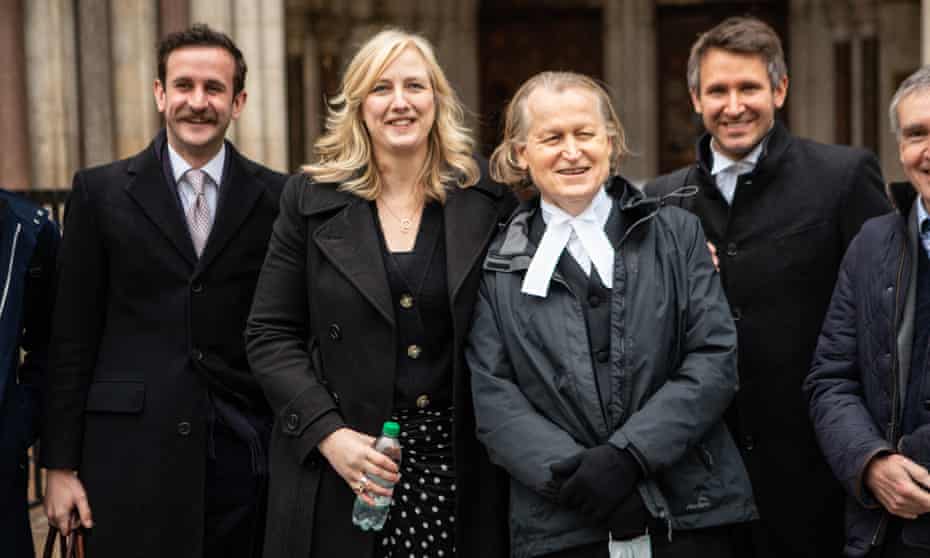 |
| Carole Cadwalladr and her legal team outside the royal courts of justice. Photograph: Antonio |
Last week, after a nearly six-month wait, I learned that I’d won the libel claim brought against me by Arron Banks, the main funder of the Leave.EU campaign. It has been a long, brutal haul and the stress over the three years since it began has been extreme. I’m not so much relieved as completely numb.
I had been braced to lose and I knew exactly what would happen if I had. The headlines I would face, the accusation that I was – what my detractors have always claimed – a “conspiracist”, the social media shitstorm that would ensue. I had no doubt about how devastating it would be because every step of this litigation has felt as if it was aimed at trying to crush me. In large part, it’s succeeded.
The lawsuit was directed at 24 words I used in a Ted Talk in 2019 but my history with Banks goes back much further. The entire investigation that would uncover the Facebook-Cambridge Analytica scandal began in 2016 with a series of denials from the firm about its relationship with Leave.EU.
That investigation led not just to record fines against Facebook and Mark Zuckerberg being dragged before Congress, but to findings that Banks’s Leave.EU campaign had broken both electoral and data laws. But it was our revelations in this paper about his relationship with the Russian government that hit a nerve. Banks reported me to the police. He accused me of computer hacking and then blackmail.
And then a year later, he sued.
Over these words that I told the audience at Ted’s main conference in Vancouver: “… and I’m not even going to get into the lies that Arron Banks told about his covert relationship with the Russian government”.
I thought the meaning of these words was blindingly obvious. That he’d told lies about his covert relationship with the Russian government! I was wrong. In November 2019, as part of the hearing to determine the “legal” meaning of the words I had used, Mr Justice Saini came up with his formulation, not the one I thought the words had meant; not even the one Banks had advanced. He contended that I’d said he’d had “a secret relationship with the Russian government in relation to acceptance of foreign funding of electoral campaigns in breach of the law”.
The judge’s ruling meant that I was going to be put on trial to defend the truth of words I’d never said
It felt like I’d stepped into the pages of a Kafka novel. The judge’s ruling meant that I was going to be put on trial to defend the truth of a statement I’d never actually said or meant.
When news broke that I’d withdrawn the truth defence and would instead be defending it only on public interest, it sent the rightwing media system into meltdown. A tsunami of abusive articles, tweets, pronouncements from commentators and MPs, the low point of which was when the director of the Orwell prize rang me to say that of course they wouldn’t be asking for my prize back as the Spectator was demanding, but they’d taken it sufficiently seriously to take legal advice.
I don’t know if it was because these smears against me stuck or if our entire press had been rendered mute in the face of Banks’s legal threats, but the near total silence around this case has been one of its most extraordinary aspects. One month before Russia invaded Ukraine, as part of the legal action, documents disclosed by both me and Banks provided new insight about the relationship between the biggest funder of the Brexit campaign and the Kremlin in a multimillion pound trial against a journalist that 19 press freedom organisations said they believed was an abuse of law. Much of this went wholly unreported. Save for the Guardian, not a single mainstream news outlet covered any of it.
I’m writing this today because the law must change. We cannot and must not allow another journalist to go through this. Not for the sake of their sanity but for the health of our democracy. Because this is not democracy. It’s oligarchy. And Banks v Cadwalladr needs to be the last time these obscene laws are used against a journalist in this way.
What this case proves is that no journalist is safe. The judge, Mrs Justice Steyn, said that Banks’s case against me was not a “Slapp” suit, that is a strategic lawsuit against public participation. She said his attempt to seek vindication through the proceedings against me was legitimate. She is correct because it couldn’t be. There is no definition of a Slapp suit in UK law, which is why none of what I believe to be the abusive aspects of this case were entered into evidence. They formed no part of my defence, one of the things I found most upsetting after the trial.
However, the judge clearly states in her judgment that the Observer had previously published a report containing “essentially the same allegations, and a very similar meaning”. But Banks didn’t sue the Observer and he didn’t sue Ted, he sued me. He presumably thought I was the weakest link. He was wrong. But only because an incredible sea of people rose up to support me. I relied on the generosity of my legal team and the kindness of strangers: 28,887 people who contributed the astonishing sum of £819,835 to my two crowdfunders. Even writing that makes me tear up.
The ability to report on the Kremlin’s involvement with leading individuals in the Brexit campaign would have been stifled forever
It would have been utterly impossible for me to defend myself without this support. It was only barely possible even with it. But if I hadn’t done so, some key facts about the political moment that changed our country forever – Brexit – could have been rewritten.The ability to report on the Kremlin’s involvement with leading individuals in the Brexit campaign would have been stifled forever. The record could have been changed.
This is because what the coverage of the case last week missed, and what lay readers of the judgment probably won’t understand, is what an extraordinary document it is. Not just for what it means for all UK news outlets in terms of a public interest defence succeeding, but for a forensic examination of the facts of Banks’s relationship with the Russian government that is on the record forever.
I was blown away reading it. Mrs Justice Steyn painstakingly undertook her own examination of the accuracy of Banks’s claim that his “sole involvement with the Russians was a boozy six-hour lunch”. That is what he claimed after the Electoral Commission announced it would investigate the “true source” of his £8m donation to the Brexit campaign. And this is what she found. That statement was, she said, “wholly inaccurate”.
She examined all the underlying documentation, including evidence newly revealed in the case, and concluded “he had at least four meetings, including three lunches”. She added: “It would be wrong to expect a journalist to refrain from identifying such an inaccurate statement… as a lie.”
But it doesn’t end there. She noted: “The four meetings on 6 November 2015, 17 November 2015, 19 August 2016 and 18 November 2016 were probably not the full extent [of] Mr Banks’s meetings with Russian officials.” There were reasonable grounds to believe numerous other meetings occurred. She regards Banks’s words in an email on 19 January 2016 that he intended “to pop in and see the ambassador as well” were “suggestive of a relationship in which he could visit the Russian ambassador with ease”.
She said the statement by Andy Wigmore, spokesman for the Leave.EU campaign and Banks’s business partner, about why he retracted his claim that Banks was in Moscow in early 2016 as “not credible”. Nor was Banks’s claim that he received a document entitled “Russian gold sector consolidation play” from a British associate, not a Russian oligarch.
Boris Johnson’s government came to power on the coat-tails of Brexit. It has refused to investigate Russia’s continuing attacks on western democracy and our information systems. Johnson personally intervened to delay publication of the Intelligence and Security Committee’s Russia report. He continues to refuse its demand for an inquiry.
The only information we have about Russia’s efforts has come from US investigators and a handful of journalists. And now this judgment.
The personal, physical, psychological and professional toll of fighting this case has been profound. But it’s not my win, it belongs to the legal team and the 28,887 people who stood alongside me. Banks could still decide to appeal against Mrs Justice Steyn’s interpretation of the law. But not the facts.
Whatever happens next, we have these now. We held the line. There were at least four meetings between the main funder of the Brexit campaign and the Russian government. There are reasonable grounds to believe there were many more. Fact.
This article was amended on 19 June 2022 to refer to the author being contacted by the director of the Orwell prize, not by the prize’s chair as an earlier version said.
The Observer view on Carole Cadwalladr and a victory for public interest journalism
Observer editorial
The journalist’s successful defence is a testament to her courage and a warning to the very wealthy that they can’t rely on the courts to escape criticism
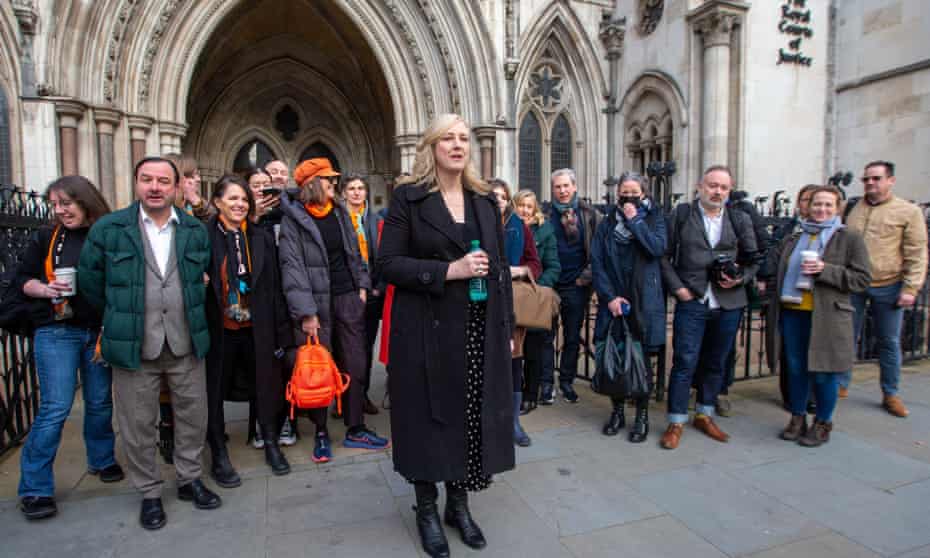 |
| Carole Cadwalladr outside the Royal Courts of Justice with her supporters in January 2022. Photograph: Tayfun Salcı/Zuma Press Wire/Rex/Shutterstock |
The resolve displayed by Carole Cadwalladr in her successful defence against a libel action brought by Arron Banks calls to mind Hemingway’s definition of courage as “grace under pressure”. For years, this award-winning journalist had been investigating the role of social media in our democracy and the role that Facebook in particular had played in the Brexit referendum. Since Banks was a leading figure in – and a substantial donor to – the leave campaign, she had inevitably become interested in his finances, and in a Ted Talk in April 2019 referred briefly to him in 24 words and later said something similar in a tweet.
The context for the remark was that the Times, the Observer and other news outlets had been reporting how Mr Banks had, as one lawyer put it, “misled everyone about the number, and nature, of his covert meetings with Russian officials”.
A judge held that Cadwalladr’s words conveyed a meaning that she said she had not intended and indeed didn’t believe to be true. She dropped her defence of truth and relied on one of public interest. Banks could have sued the publisher of the Ted Talk for defamation, but it was Cadwalladr personally that he chose to sue.
The significance of this will not be lost on anyone with experience of libel actions in British courts. The severity of this country’s defamation laws and the cost of fighting a case make the high court a casino in which too often only the very wealthy can afford to play. The potential costs of defending a case can run into millions of pounds and can be enough to persuade many publishers, let alone individual journalists, to back down and settle without going to court. When Catherine Belton, author of Putin’s People, and HarperCollins, her publisher, were sued for libel in 2021 by several oligarchs, including Roman Abramovich and a Russian oil company, she told MPs that her case had cost the publisher £1.5m in legal fees to defend and could have cost £5m if the case had gone to trial. (In the end, the cases were settled or withdrawn.)
These chilling realities, when combined with the complexity of defending a case under UK libel laws, explain why British journalists are reluctant to publish information about wealthy or powerful individuals. It takes courage to take risks – as Cadwalladr did – that could result in personal bankruptcy. As she herself says, the personal, physical, psychological and professional toll for her of fighting the case has been profound. That is why Robert Maxwell, a corrupt and litigious media tycoon, could escape critical media examination until he drowned after looting the pension fund of his publishing empire. Until recently, many London-based Russian oligarchs used the same strategy to intimidate journalists and authors.
The most positive outcome of the Banks case is the evolution of judicial thinking on what constitutes a public interest defence. The judge decided that, in light of Cadwalladr’s formidable investigative persistence, all the things she had unearthed about Banks, his finances and his meetings with Russian officials, it was reasonable to believe that it was in the public interest to have said what she did. This judgment is a triumphant vindication of a formidable journalist who endured unconscionable personal stress and misogynistic abuse to get her stories out. And it leaves the rest of us in her debt.
Sự bảo vệ thành công của nhà báo là một minh chứng cho sự can đảm của cô và là lời cảnh báo cho những người rất giàu có rằng họ không thể dựa vào tòa án để thoát khỏi những lời chỉ trích.
Quyết tâm của Carole Cadwalladr trong việc bảo vệ thành công của cô chống lại một hành động phỉ báng do Arron Banks đưa ra gọi đến định nghĩa của Hemingway về lòng can đảm là "ân sủng dưới áp lực". Trong nhiều năm, nhà báo từng đoạt giải thưởng này đã điều tra vai trò của phương tiện truyền thông xã hội trong nền dân chủ của chúng ta và vai trò của Facebook nói riêng trong cuộc trưng cầu dân ý Brexit. Vì Banks là một nhân vật hàng đầu - và là một nhà tài trợ đáng kể cho chiến dịch nghỉ phép, cô chắc chắn đã trở nên quan tâm đến tài chính của anh ta, và trong một cuộc nói chuyện Ted vào tháng 4 năm 2019 đã đề cập ngắn gọn đến anh ta trong 24 từ và sau đó nói điều gì đó tương tự trong một tweet.
Bối cảnh cho nhận xét này là Times, Observer và các hãng tin khác đã đưa tin về việc ông Banks, như một luật sư đã nói, "đã lừa dối mọi người về số lượng và bản chất của các cuộc họp bí mật của ông với các quan chức Nga".
Một thẩm phán cho rằng những lời của Cadwalladr truyền đạt một ý nghĩa mà cô nói rằng cô không có ý định và thực sự không tin là đúng. Cô đã từ bỏ việc bảo vệ sự thật của mình và dựa vào một lợi ích công cộng. Banks có thể đã kiện nhà xuất bản của Ted Talk vì tội phỉ báng, nhưng cá nhân Cadwalladr đã chọn kiện.
Tầm quan trọng của điều này sẽ không bị mất đối với bất kỳ ai có kinh nghiệm về hành động phỉ báng tại các tòa án Anh. Mức độ nghiêm trọng của luật phỉ báng của đất nước này và chi phí đấu tranh cho một vụ kiện làm cho tòa án tối cao trở thành một sòng bạc trong đó quá thường chỉ những người rất giàu có mới có thể đủ khả năng để chơi. Chi phí tiềm năng để bảo vệ một vụ kiện có thể lên tới hàng triệu bảng và có thể đủ để thuyết phục nhiều nhà xuất bản, chứ đừng nói đến các nhà báo cá nhân, lùi lại và giải quyết mà không cần ra tòa. Khi Catherine Belton, tác giả của Cuốn nhân dân của Putin và HarperCollins, nhà xuất bản của cô, bị kiện vì tội phỉ báng vào năm 2021 bởi một số nhà tài phiệt, bao gồm Roman Abramovich và một công ty dầu mỏ của Nga, cô nói với các nghị sĩ rằng trường hợp của cô đã tiêu tốn của nhà xuất bản 1,5 triệu bảng phí pháp lý để bảo vệ và có thể tốn 5 triệu bảng nếu vụ án được đưa ra xét xử. (Cuối cùng, các trường hợp đã được giải quyết hoặc rút lại.)
Những thực tế rùng rợn này, khi kết hợp với sự phức tạp của việc bảo vệ một vụ án theo luật phỉ báng của Vương quốc Anh, giải thích lý do tại sao các nhà báo Anh không muốn công bố thông tin về các cá nhân giàu có hoặc quyền lực. Cần có can đảm để chấp nhận rủi ro - như Cadwalladr đã làm - điều đó có thể dẫn đến phá sản cá nhân. Như chính cô nói, thiệt hại cá nhân, thể chất, tâm lý và nghề nghiệp cho cô khi chiến đấu với vụ án là rất sâu sắc. Đó là lý do tại sao Robert Maxwell, một ông trùm truyền thông tham nhũng và kiện tụng, có thể thoát khỏi sự kiểm tra truyền thông quan trọng cho đến khi ông chết đuối sau khi cướp bóc quỹ hưu trí của đế chế xuất bản của mình. Cho đến gần đây, nhiều nhà tài phiệt Nga có trụ sở tại London đã sử dụng chiến lược tương tự để đe dọa các nhà báo và tác giả.
Kết quả tích cực nhất của vụ án Banks là sự phát triển của tư duy tư pháp về những gì cấu thành một sự bảo vệ lợi ích công cộng. Thẩm phán quyết định rằng, trước sự kiên trì điều tra ghê gớm của Cadwalladr, tất cả những điều cô đã khai quật được về Banks, tài chính của anh ta và các cuộc họp của anh ta với các quan chức Nga, thật hợp lý khi tin rằng đó là lợi ích công cộng để nói những gì cô ấy đã làm. Phán quyết này là một minh chứng chiến thắng của một nhà báo ghê gớm, người đã chịu đựng căng thẳng cá nhân vô lương tâm và lạm dụng phụ nữ để đưa câu chuyện của cô ra ngoài. Và nó để lại phần còn lại của chúng tôi trong nợ của cô ấy.
Nguồn bài viết Du học Đồng Thịnh | (+84) 96 993.7773 | (+84) 96 1660.266 | (+44) 020 753 800 87 | info@dongthinh.co.uk

Đăng nhận xét