

An at-home glimpse at your hormone health.
Low levels of testosterone in males can cause a myriad of unpleasant symptoms—and testosterone is equally important for females, too. Even so, testosterone testing is not a standard practice for most health care providers, unless you're showing severe symptoms of low levels. Thankfully, there are now at-home testosterone tests that allow you to check your levels from home.
Like many at-home testing options, testosterone tests are painless and provide results relatively quickly. Since these tests are becoming more common, we spoke with experts and compared and contrasted each of the options, to provide you with the best at-home testosterone tests available today.
Keep reading to find our picks and to learn more about why healthy testosterone levels are important in people of all genders.
A quick peek at the best at-home testosterone tests of 2022:
LetsGetCheckedGo to review
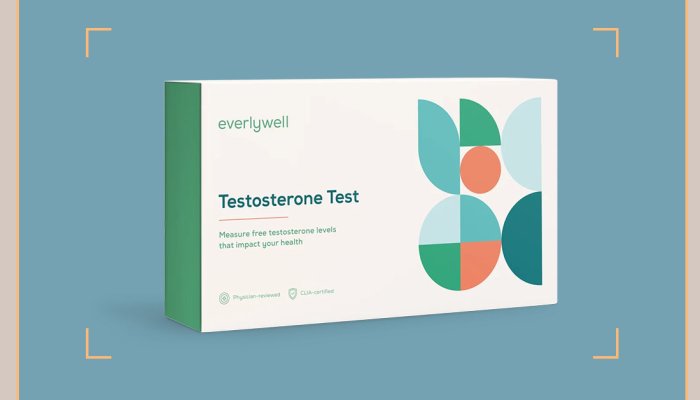
EverlyWellGo to review
MyLabBoxGo to review
VerisanaGo to review
Male ExcelGo to review
What is testosterone & how is it produced?
Testosterone is a steroid hormone produced in the testes in men and the ovaries and adrenal glands in women. While males typically produce significantly more testosterone, females also produce a small but necessary amount.
The pituitary gland, which sits right in the center of your brain, controls the production and regulation of testosterone.
For men, research shows that testosterone regulates the sex drive, sperm production, fat distribution, muscle mass and strength, and bone density1. It also plays a vital role in mood and cognitive function2. In women, testosterone impacts many of the same factors3 but on a much less prominent level.
According to Alice Williams, M.D. and owner of dralicewilliams.com, low levels of testosterone can cause several problems, including low sex drive, infertility, erectile dysfunction, osteoporosis, weight gain, muscle loss, fatigue, and depression.
Treatment with testosterone replacement therapy helps to restore normal levels of the hormone and minimize these symptoms.
Normal levels of testosterone hormone:
Male: 300 to 1,000 nanograms per deciliter (ng/dL)
Female: 15 to 70 ng/dL
Because the normal range for males is so wide, most health care providers take a clinical look at symptoms, as well as lab levels, to determine the appropriate treatment plan.
While there's a lot of talk about low testosterone, it's important to address high testosterone levels, too. Increased blood levels of testosterone can lead to a risk of heart and liver problems, along with an increased risk of prostate cancer for men. In women, high testosterone levels can increase the risk of Type 2 diabetes, PCOS, breast cancer, and endometrial cancer.
How does an at-home test measure your testosterone?
At-home testosterone tests use either a finger-prick blood sample or a tube of your saliva. There are two types of testosterone tests: total and free.
Total testosterone includes all the testosterone hormones in your body, including those that are bound to a protein and those that are free-floating (active).
Free testosterone tests only account for the free-floating or unbound hormone. As with most tests, the more information you can gather about your hormone deficiency, the better.
We recommend testing total testosterone for a more holistic view of your hormone levels.
Who should use an at-home testosterone test?
As we said, hormone testing is not a standard screening with most health care providers unless you are exhibiting abnormal symptoms. Even then, these tests are often not discussed until other medical diagnoses have been excluded. This is where at-home testing becomes not only convenient but also an essential step in advocacy for your health.
At-home testosterone tests can be used by anyone who wants to check their testosterone levels. Because the list of symptoms of low testosterone is extensive, ruling out a hormone imbalance can be an easy and quick way to determine whether that is the cause of your symptoms.
If you are a male with no symptoms, an at-home test is a great way to determine your baseline testosterone (your body's normal level of testosterone), which may be helpful information in the future.
Testosterone levels naturally decrease with aging. However, medical diagnoses such as obesity, Type 2 diabetes, liver or kidney dysfunction, HIV/AIDS, and sleep apnea can deplete testosterone faster than the normal aging process. In fact, according to the American Urological Association, 30% of overweight men had low testosterone compared to only 6.4% of those with normal weight.
Symptoms of low testosterone in men:Sexual dysfunction
Infertility
Depression
Decreased concentration and memory
Decreased muscle mass
Increased body fat
Symptoms of low testosterone in women:Muscle weakness
Fatigue
Sleep disturbances
Weight gain
Fertility issues
Irregular menstrual cycles
Low libido
Loss of bone density
How we picked:
Accuracy
Every at-home test must meet all CLIA-certified standards, which means it follows the same protocols as a traditional lab.
Sample type
Serum (blood) and saliva is the preferred method of sample collection. We looked for tests that use this method.
Cost
At-home tests should be convenient, especially when it comes to cost. The ability to use an HSA or FSA account is invaluable—and we took this into account with our selections. We always suggest checking with your account carrier to determine the criteria and requirements.
Follow-up
We looked for companies that offer a consultation to discuss your results. Keep in mind, it's always best to speak with your health care provider to develop a treatment plan.
When is the best time to test for hormone imbalance?
Your levels will decrease during the day, and research shows that testing during the hours of 8 a.m. to 10 a.m.4 will give you the most accurate result. This time is subjective, though, and would be different for someone who works night shifts or wakes up at 4 a.m. Sherpa explains that testing within the first two to three hours of waking up (whatever that time may be for you) is best.
FAQ
Can you test testosterone levels at home?
Are home testosterone tests accurate?
Are saliva testosterone tests accurate?
The takeaway.
Testosterone levels can fluctuate throughout your life, decreasing as you age. Some men and women may not feel any different as their levels drop, but others may become very aware of their symptoms. The best way to get a quick answer to your testosterone level is to choose from one of these best at-home testosterone tests. There are many ways to boost your testosterone naturally, but it's encouraged to discuss any results, even normal ones, with your health care provider.
To dive further into your health, find out what other tests functional medicine doctors recommend.
Nguồn bài viết Du học Đồng Thịnh | (+84) 96 993.7773 | (+84) 96 1660.266 | (+44) 020 753 800 87 | info@dongthinh.co.uk

Đăng nhận xét