


Các nhà khoa học Mỹ đã tìm thấy mối liên quan giữa trình độ đọc hiểu kém, tỉ lệ bỏ học và tình trạng phạm tội.
Theo kết quả một nghiên cứu của ĐH Chicago (Mỹ), 85%-90% học sinh từ mầm non đến lớp 12 ở nước này có khả năng đọc hiểu kém. Tuy nhiên, nếu áp dụng các chương trình ngăn ngừa và can thiệp ngôn ngữ sớm, cụ thể là trước lớp 3, tình trạng này sẽ được khắc phục. Ngược lại, nếu không được can thiệp trước 9 tuổi, 75% số trẻ sẽ tiếp tục gặp khó khăn trong việc đọc hiểu suốt thời gian học phổ thông cho đến khi trưởng thành.
Một nghiên cứu trong thời gian dài của tổ chức Annie E. Casey Foundation (Mỹ) phát hiện nếu học sinh không thông thạo đọc hiểu vào lớp 3 sẽ có nguy cơ rớt phổ thông gấp 4 lần những em khác.
Theo USA Today, các chuyên gia đã tìm thấy mối liên quan giữa trình độ đọc hiểu kém, tỉ lệ bỏ học và tình trạng phạm tội dù trình độ học vấn kém không phải là nguyên nhân trực tiếp. Theo kết quả của nhóm nghiên cứu thuộc ĐH Stanford (Mỹ), học sinh bỏ học ở bậc phổ thông có khuynh hướng bị bắt giữ gấp 3,5 lần so với học sinh đã tốt nghiệp. Tỉ lệ học sinh đọc hiểu kém chiếm 1/3 tổng số học sinh trên toàn nước Mỹ và nhóm phạm tội chiếm hơn 63% tổng số trẻ không tốt nghiệp trung học.
Kết quả khảo sát toàn quốc về khả năng đọc hiểu của người lớn ở Mỹ cho thấy khoảng 70% tội phạm không thể đọc văn bản ở trình độ lớp 4, khoảng 85% trẻ bị phát hiện mù chữ trong quá trình đối chất với tòa án vị thành niên. 68% tội phạm nam giới trên toàn nước Mỹ không có bằng trung học.
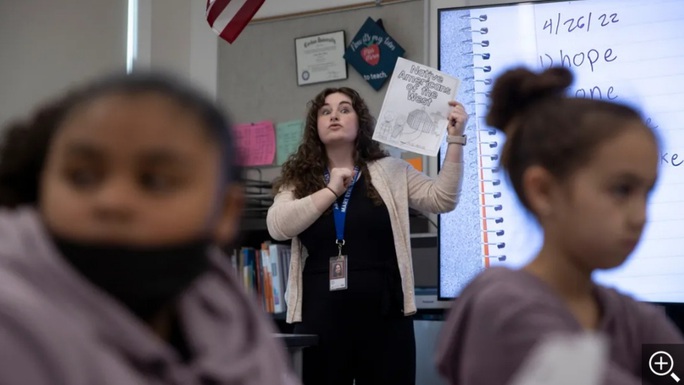
Giáo viên và học sinh trong một lớp tập đọc tại trường tiểu học Tiểu học Mary Eyre (Mỹ) - Ảnh: USA Today.
Nếu tiếp tục học lên cao mà không được can thiệp ngôn ngữ kịp thời, những học sinh này sẽ không theo kịp các bạn khác. Vì vậy, chính quyền địa phương và nhà trường phải kịp thời đề ra biện pháp thích hợp như đầu tư giáo trình đọc hiểu mới, tập huấn cho giáo viên phụ trách.
Bên cạnh đó, phụ huynh cũng cần quan tâm sâu sát con cái để sớm phát hiện và đồng hành với chuyên gia trong việc cải thiện khả năng ngôn ngữ của con mình. Theo Bộ Giáo dục Mỹ, cha mẹ nên tập thói quen trò chuyện với con từ khi chúng còn chưa biết nói, đọc truyện cho con nghe ít nhất 30 phút/ngày và giúp con tự tập đọc.
Poor reading comprehension linked to crime in the US
American scientists have found an association between poor reading comprehension, dropout rates and crime.
American scientists have found an association between poor reading comprehension, dropout rates and crime.
According to a study by the University of Chicago (USA), 85%-90% of students from kindergarten to grade 12 in this country have poor reading comprehension skills. However, if early language intervention and prevention programs are applied, particularly before grade 3, this situation will be overcome. In contrast, if no intervention is given before the age of 9, 75% of children will continue to have difficulty in reading comprehension throughout high school until adulthood.
A long-term study by the Annie E. Casey Foundation (USA) found that if students are not proficient in reading in 3rd grade, they will be 4 times more likely to fail high school than other students.
According to USA Today, experts have found an association between poor reading comprehension, dropout rates and crime, although poor education is not a direct cause. According to the results of a research team from Stanford University (USA), high school dropouts are 3.5 times more likely to be arrested than graduating students. Poor literacy accounts for one-third of all students in the United States, and delinquents account for more than 63% of all children who do not graduate from high school.
The results of a national survey of adult literacy in the US show that about 70% of criminals cannot read texts at the 4th grade level, about 85% of children are found illiterate during court appearances. juvenile judgment. 68% of male criminals nationwide do not have a high school diploma.
If they continue their education without timely language intervention, these students will not be able to keep up with their peers. Therefore, local authorities and schools must promptly take appropriate measures such as investing in new reading comprehension curricula, training teachers in charge.
Besides, parents also need to pay close attention to their children to early detect and accompany experts in improving their child's language ability. According to the US Department of Education, parents should get into the habit of talking to their children from the time they can't speak, reading stories to their children for at least 30 minutes a day and helping them learn to read on their own.
* NguồnTư vấn du học Anh Quốc - Quốc Tế Du Học Đồng Thịnh dongthinh.co.uk (+84) 96 993.7773 | (+84) 96 1660.266 | (+44) 020 753 800 87 | info@dongthinh.co.uk

Đăng nhận xét